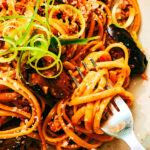
Gochujang Pasta with Eggplant
This easy silky Gochujang Pasta with Eggplant is ready in 25 minutes! Seared sesame-soy eggplant and a buttery garlic gochujang sauce. It's delicious, umami-packed, and not too spicy. You'll crave this fast, flavor-packed weeknight dinner again and again. (Vegetarian, Vegan option).
Servings: 2
Ingredients
Eggplant
- 1 lb eggplant (see note 1)
- 1¼ teaspoon fine sea salt (divided use)
- 1 tablespoon grapeseed oil (or other neutral oil)
- 1 tablespoon tamari (or soy sauce)
- 1 teaspoon toasted sesame oil
Pasta
- 3 scallions (green onions)
- 6 oz dried linguine (or spaghetti)
- 3 tablespoons butter (see note 2, vegan if needed)
- 2 cloves minced garlic
- 4 teaspoons gochujang paste (not sauce, see note 3)
- ¼ cup finely grated Parmesan cheese (see note 4, vegan if needed)
- crispy onions and/or scallion curls (for garnish)
Instructions
- Prep Scallions: Thinly slice 3 scallions. Roughly separate the white and light green parts (for cooking); and dark green part (for finishing).
- Prep Eggplant: Chop 1 lb eggplant into large bite-sized pieces (1-inch/2.5 cm). Add 3 cups cold water and 1 teaspoon of fine sea salt to a medium bowl, stir to mix. Add chopped eggplant to the bowl, then nestle a smaller bowl directly on top to ensure the eggplant is submerged in the salt water. Let sit for 10 minutes. Drain and pat eggplant dry.
- Cook Eggplant: Heat a large stainless steel skillet (see note 5) over medium-high heat. (It's hot enough when you flick water on the pan and large droplets bounce and skid around). Swirl 1 tablespoon grapeseed oil in skillet, then add eggplant in a single layer. Sprinkle with remaining ¼ teaspoon salt. Cook, stirring occasionally, until all sides are golden brown, 8 to 10 minutes. (Reduce heat if needed; add more oil if your eggplant starts to stick). Transfer to a bowl, gently toss with 1 tablespoon tamari and 1 teaspoon toasted sesame oil. Set aside.
- Cook Pasta: Meanwhile bring a large pot of salted water to a boil. Add 6 oz dried linguine and cook until al dente according to package directions. Scoop out 1 cup of the pasta water and set aside, then drain noodles.
- Build sauce: Use the same skillet from the eggplant, but let it cool down slightly (so the butter doesn't burn). Return to low heat. Melt 3 tablespoons butter, then add 2 cloves minced garlic, and the white/light green parts of the scallion. Stir to mix and cook until the garlic is pale golden, about 2 minutes. Add 4 teaspoons gochujang paste and ⅔ cup of the reserved pasta water to the skillet. (Save remaining pasta water for finishing step). Whisk until the gochujang is evenly mixed into a smooth sauce.
- Finish: Add cooked pasta to the skillet, toss until well coated. Scatter in ¼ cup finely grated Parmesan cheese and the minced dark green part of the scallions. Toss again, adding splashes of more pasta water as needed, until the noodles are coated in a silky sauce. Taste and adjust seasoning if needed. Garnish with crispy onions and/or scallion curls, if using.
Notes
- Eggplant: You can use Globe, Japanese, or Chinese eggplant for this. If using Globe eggplant, use small to medium-sized ones, for the best flavor and texture.
- Butter: Unsalted butter is recommended, but salted butter works too.
- Gochujang Paste: A thick, savory, and spicy fermented Korean chili paste. It's usually stocked next to other Asian condiments; often packaged in a red tub with a flip-top lid. Otherwise, find it online or at an Asian grocery store. This recipe uses Gochujang Paste—not Gochujang Sauce (which is thinner and includes added seasonings, sugar, vinegar, etc).
- Parmesan: ¼ cup of finely grated powdery Parmesan weighs 1 oz. To quickly grate Parmesan into a "powder", add chunks of cheese to a food processor or blender. If using a microplane, you'll need closer to ½ cup to get the same 1 oz weight because it yields lighter, fluffier shreds. If you need vegetarian-friendly Parmesan, look for one made with "microbial enzymes" rather than "rennet". Alternatively, Parmesan can be substituted for another Italian hard cheese, such as Asiago.
- Skillet: For best results, I recommend using a large (12-inch) stainless steel skillet or similar. I also tested this recipe in a cast iron skillet—it works, but you need to give the cast iron more time to cool down between sauteing the eggplant and starting the butter sauce. (Cast iron is better at retaining heat, so it stays hotter for longer vs. stainless steel). If you don't give the cast iron skillet enough time to cool down, your butter and garlic can burn easily.
- Garnishes (optional): Storebought crispy onions or shallots add a nice savory crunch. To make scallion curls, slice the green parts of the scallion into 3-inch (8 cm) lengths, then slice razor-thin strips and submerge in ice water. The scallions will curl as they soak in the cold water.
Nutrition
Calories: 681kcal | Carbohydrates: 84g | Protein: 19g | Fat: 31g | Saturated Fat: 14g | Polyunsaturated Fat: 7g | Monounsaturated Fat: 7g | Trans Fat: 1g | Cholesterol: 56mg | Sodium: 1129mg | Potassium: 901mg | Fiber: 10g | Sugar: 12g | Vitamin A: 885IU | Vitamin C: 11mg | Calcium: 174mg | Iron: 3mg