


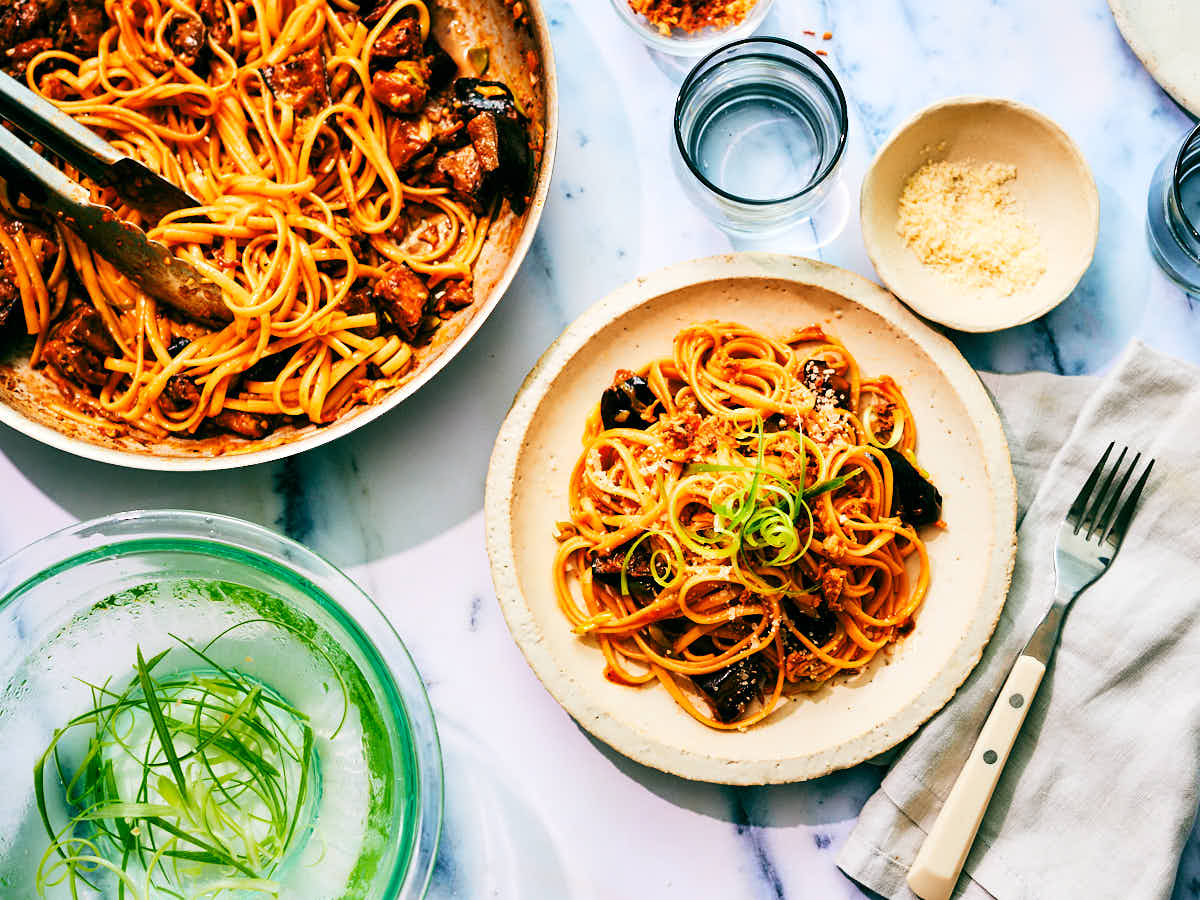
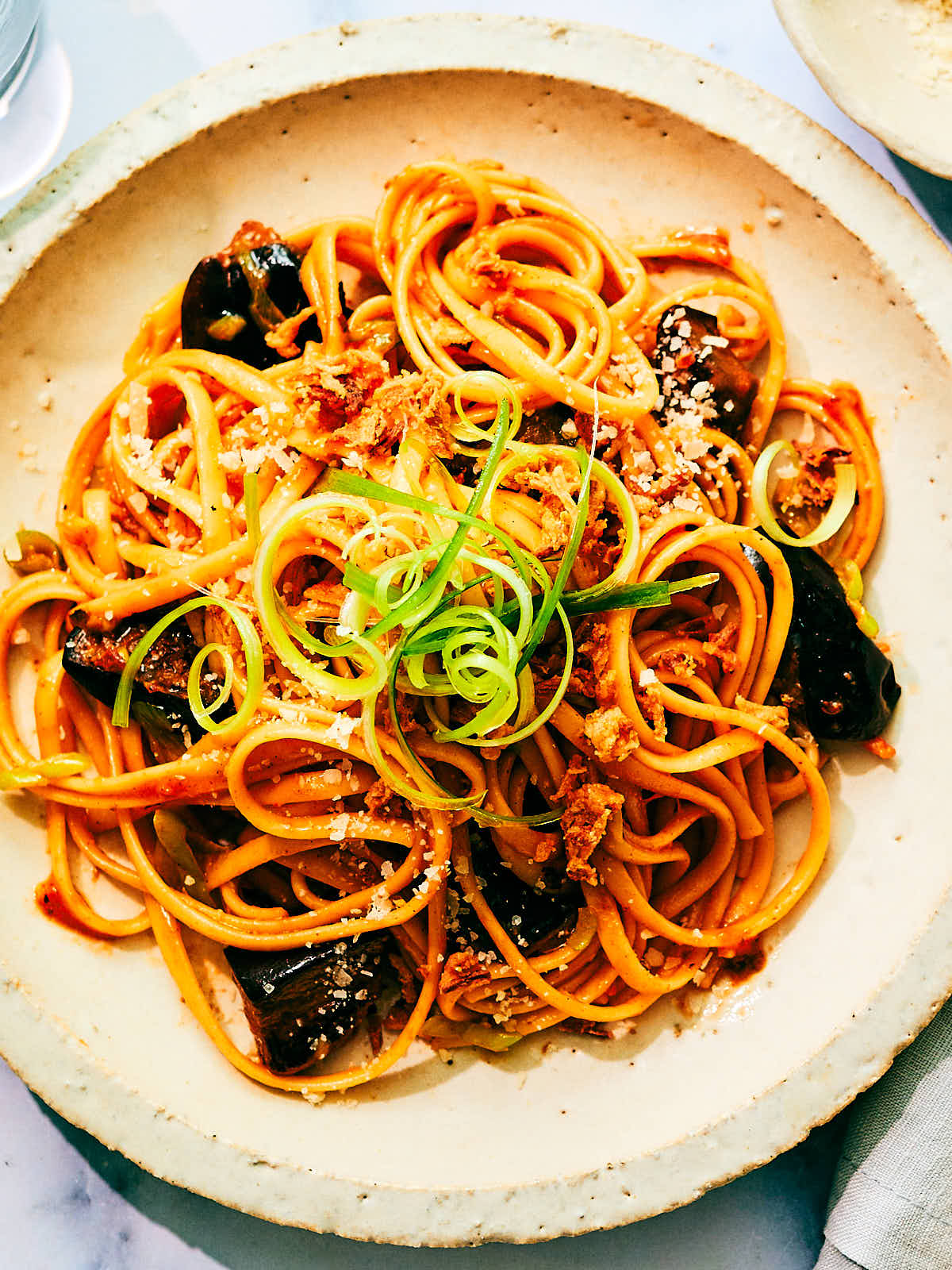
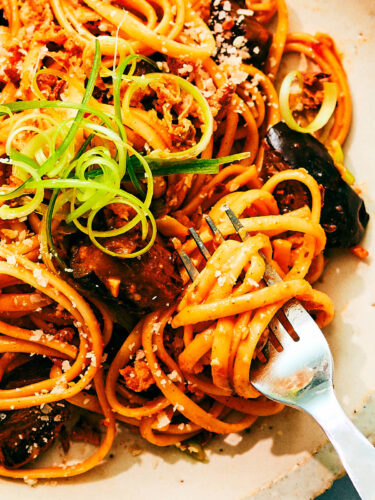
Pasta night just got an upgrade with this Gochujang Pasta with Eggplant! The silky gochujang butter sauce is packed with bold flavor and just a kiss of heat. And my trick for searing eggplant—with minimal oil—let's you pack in veggies too.
If you’ve cooked any of my pasta recipes—from this site or my printed cookbook—you know I love a quick, flavor-forward dinner. This silky Gochujang Pasta is a riff on my Mushroom Miso Pasta, swapping the miso for gochujang to give it a sweet-spicy umami kick. Toss in tamari-sesame eggplant and buttery noodles, and you’ve got a fast dinner that feels extra special!
Jump to:
Why you'll love this recipe
- Big flavor: Gochujang paste brings spice, sweet, and umami all in one spoonful. It pairs surprisingly well with pasta, garlic butter, scallions, and sesame soy eggplant.
- Fast: This easy weeknight pasta dinner is ready in just 25 minutes! The eggplant and sauce are cooked in the same pan too, so cleanup's quick too.
- Not too spicy: This recipe uses just a spoonful of gochujang. So it's not overly spicy—even my toddler loves it! See Recipe Notes for tips on how to make it spicier.
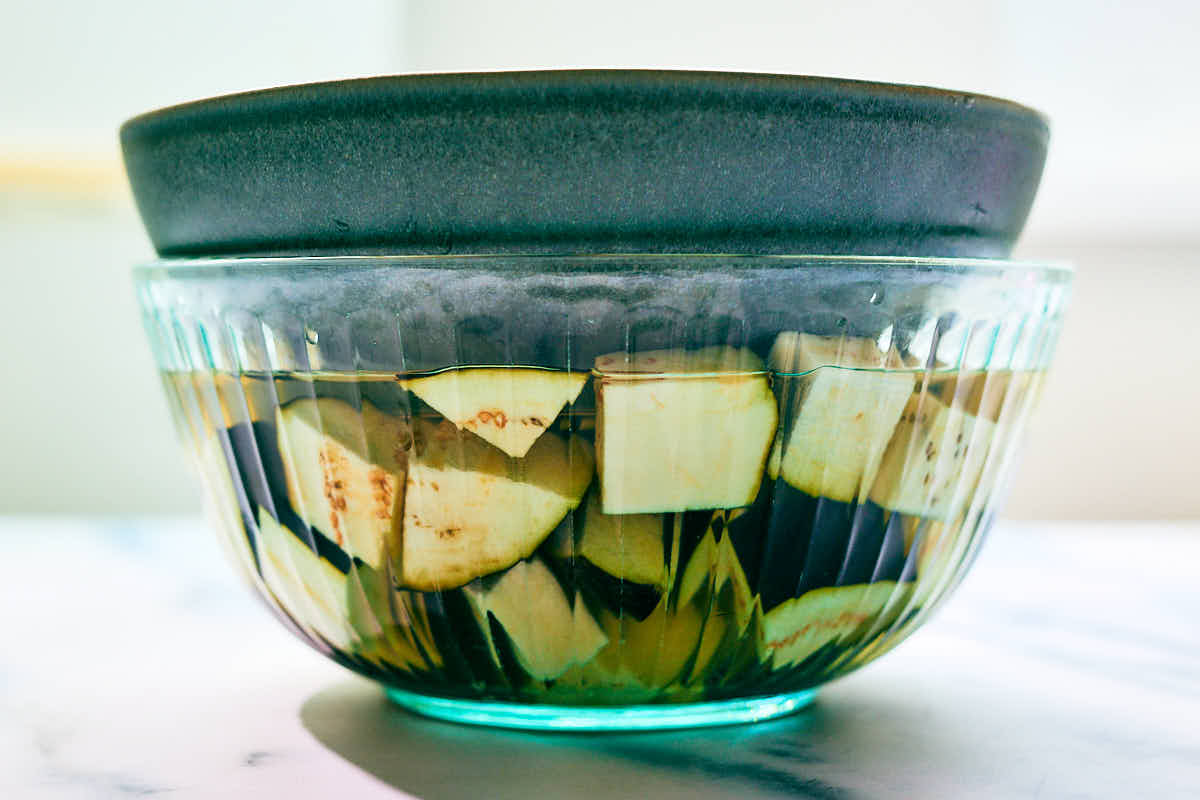
- Juicy seared eggplant—cooked with barely any oil: The salt water soak will rock your world when it comes to eggplant prep! Eggplant normally acts like a sponge, absorbing lots of oil. This trick allows you to get juicy, seared eggplant with much less oil.
- Customizable: This dish can easily accommodate any extras you want to add. Amp up the protein with tofu, meatless ground, or butter beans—or add chicken, beef, etc.

Ingredients (and substitutes)
This Gochujang Pasta recipe has just 10 ingredients (plus salt). Here's what you need:
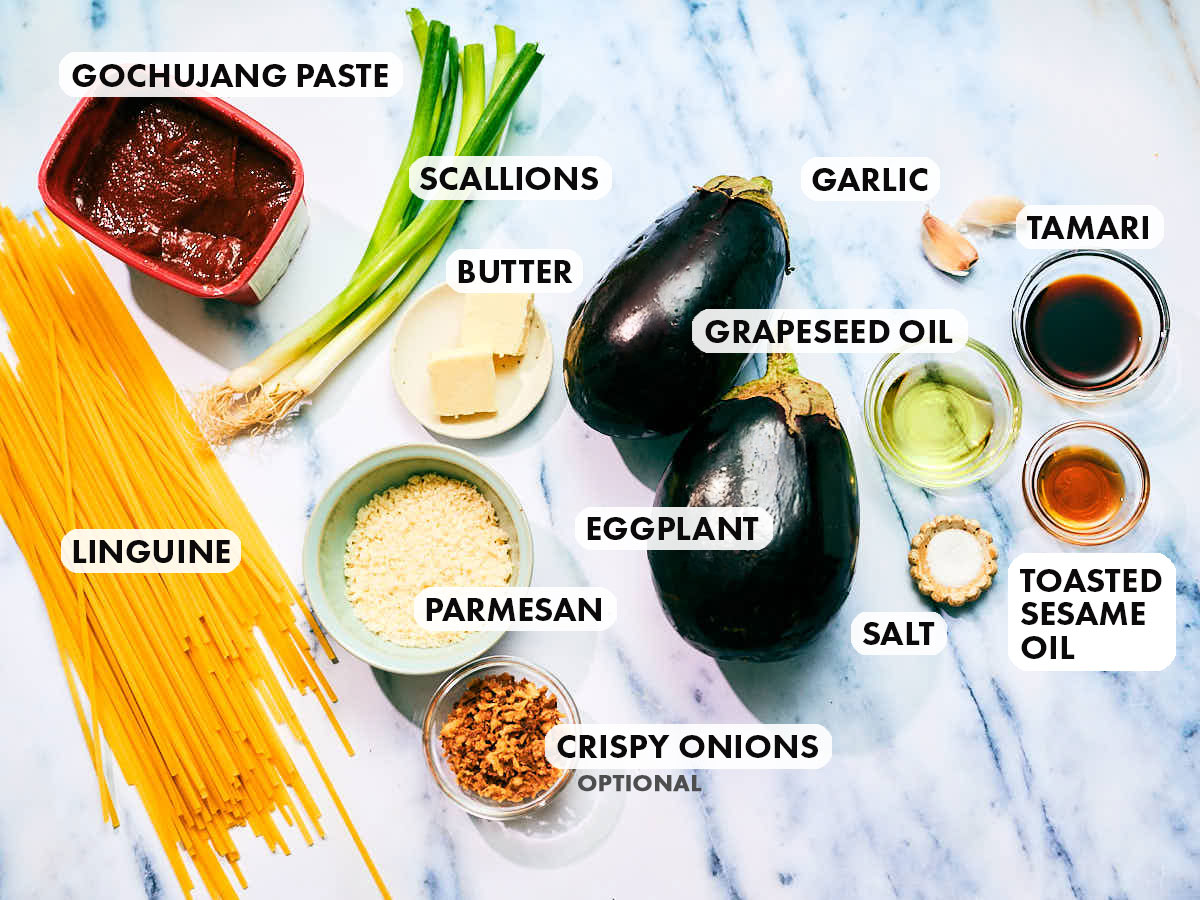
- Eggplant: I like Globe eggplant for this recipe. Select small to medium-sized eggplants for the best flavor and texture. You can substitute Japanese or Chinese eggplant.
- Gochujang Paste: A thick, fermented Korean chili paste. It's usually in a red plastic container. Grocery stores tend to stock it with other Asian condiments. Make sure you're using Gochujang paste—not Gochujang sauce, which is thinner and has more seasonings added (like vinegar and sugar).
- Pasta: Linguine, spaghetti, bucatini or another long noodle works great. I'm sure it would taste good with other pasta shapes too, so let me know if you try.
- Tamari: I love the deeper flavor that tamari adds to the eggplant, but you could substitute soy sauce instead.
- Grapeseed Oil: That's what I use at home but any neutral oil works (like vegetable, canola, sunflower, etc).
- Parmesan: Gives the pasta a silky, salty, umami-rich flavor. You could substitute another kind of hard Italian cheese instead, such as Asiago.
- Crispy Onions: Completely optional, but adds great flavor and crunch! Store-bought shallots or crispy onions can be found next to other Asian ingredients—or in the condiments aisle.
Want to make this pasta recipe vegan? All you have to do is use vegan butter and a vegan grated Parmesan-style cheese substitute that also melts.
Find the recipe card below for the complete recipe, including all ingredients and instructions.
Save this recipe!
How to make (step-by-step photos)
This Gochujang Pasta with Eggplant recipe is surprisingly fast to make. It's ready in just 25 minutes, making it an easy weeknight dinner. Here's how to make it:
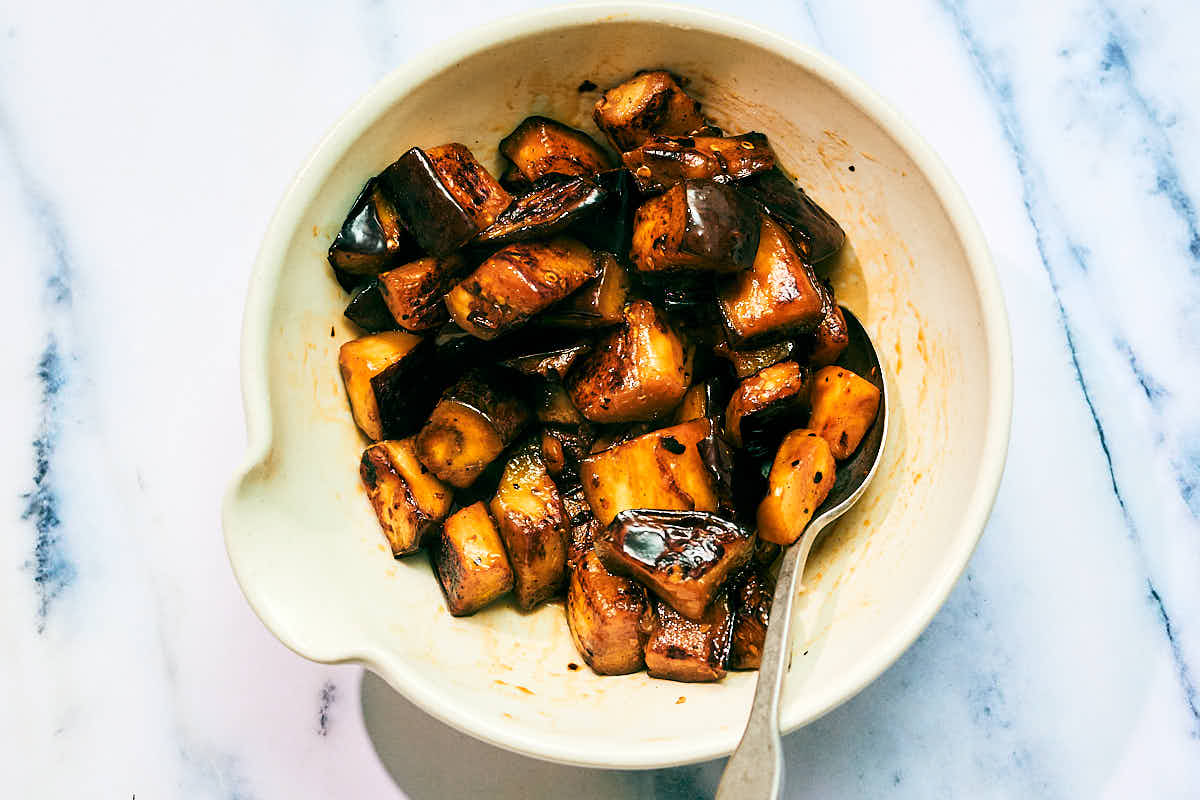
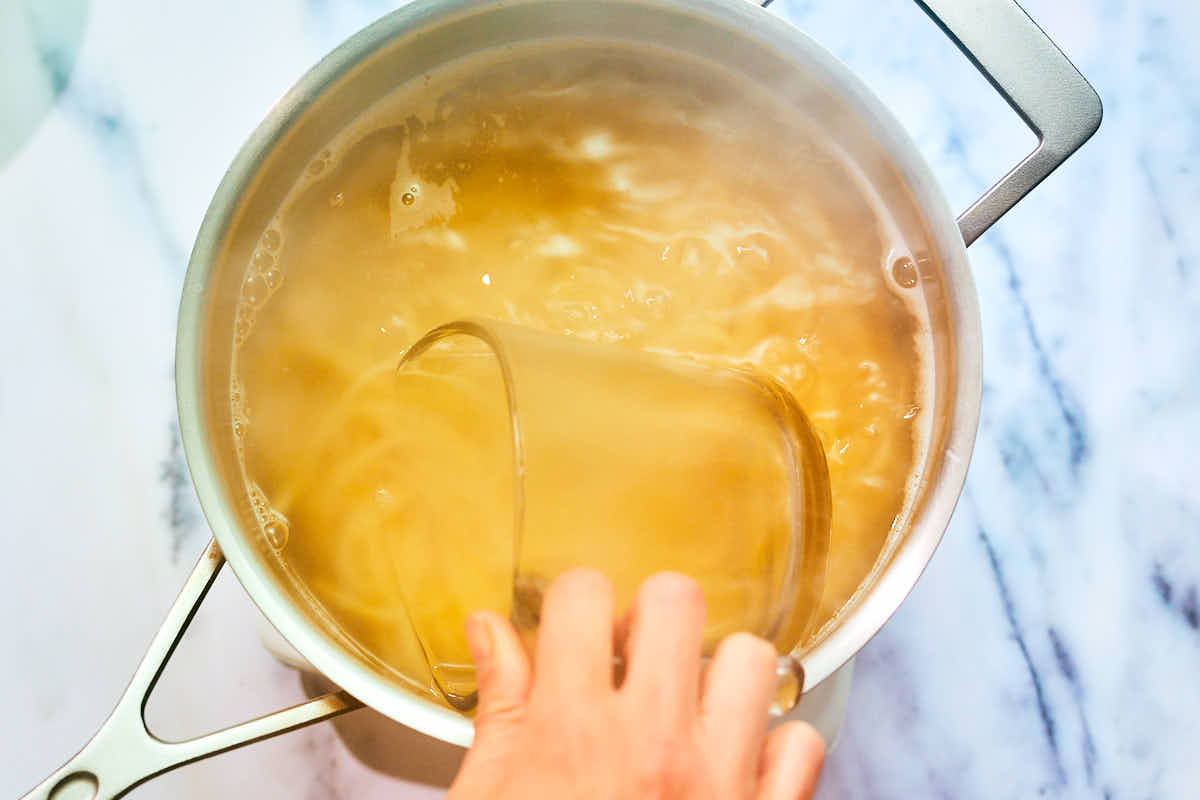
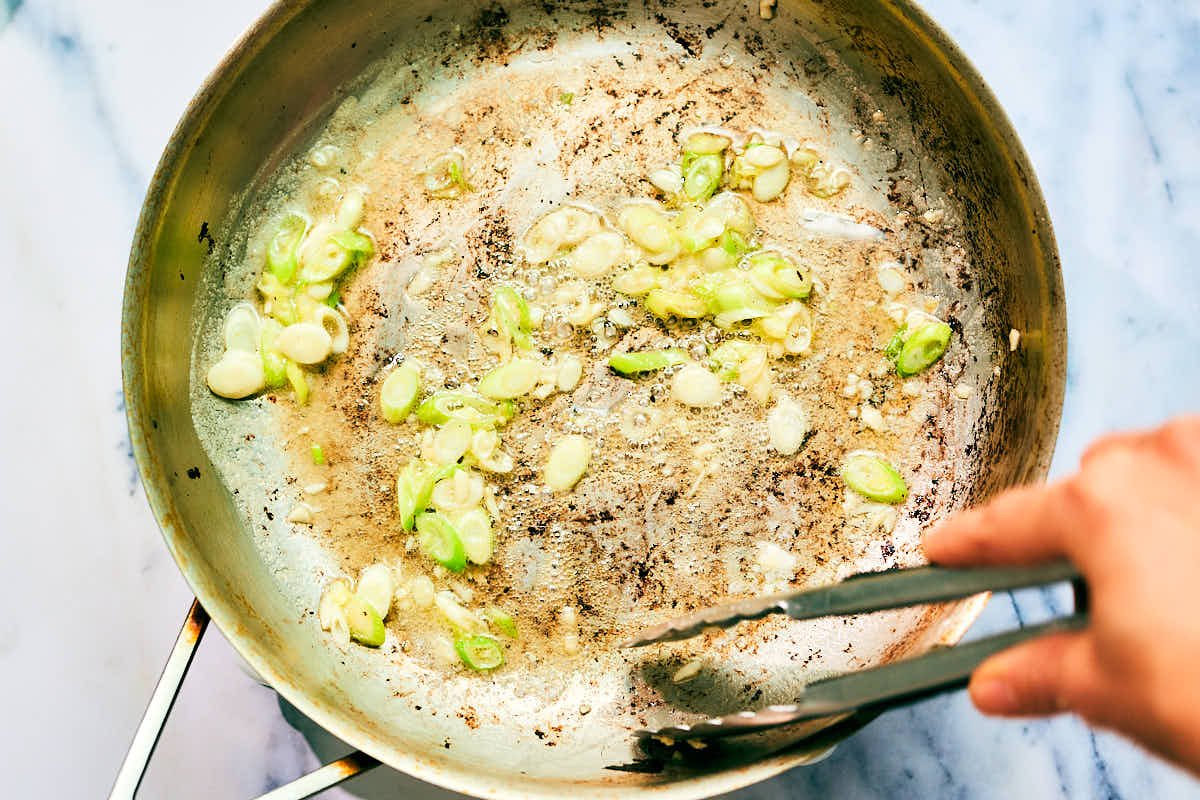
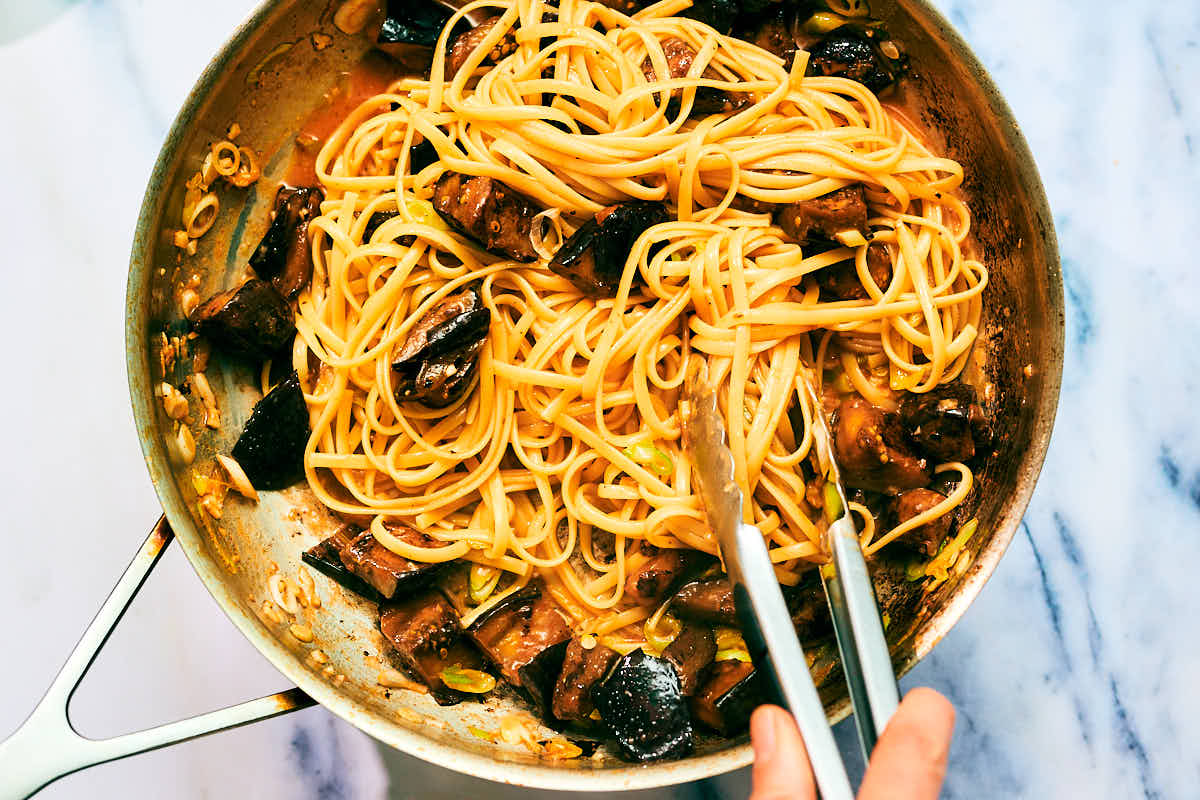
Find the recipe card below for the complete recipe, including all ingredients and instructions.
Tips
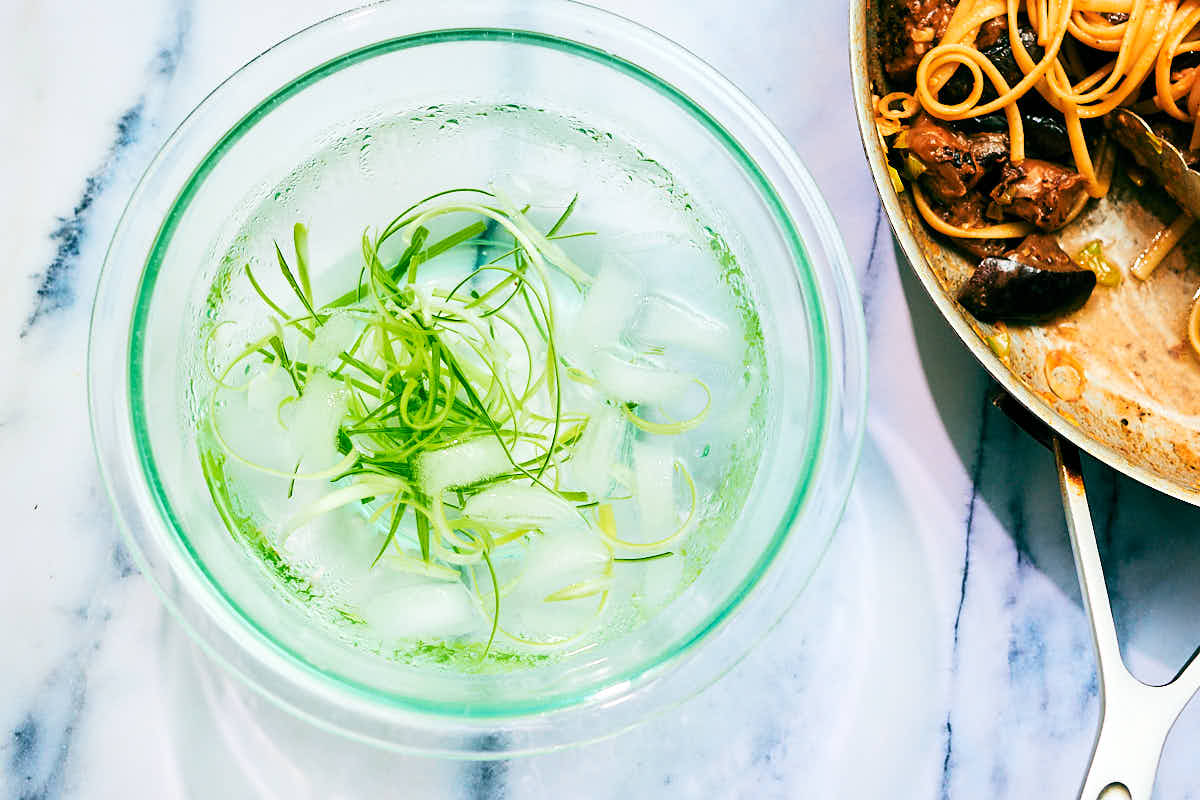
- How to make scallion curls: Scallion curls make a pretty and edible garnish. And once you get the hang of it, they're surprisingly easy to make. Just thinly slice the dark green section of the scallions, into 3-inch lengths. The thinner, the better! Submerge in a bowl of ice water and they'll start to curl as they chill.
- Add scallions at different times: This recipe uses the whole green onion, but timing matters. The white parts taste more intense, so they get sautéed with the garlic to mellow out. The darker green parts are mild and fresh-tasting, so they’re best added at the end or sprinkled on top.
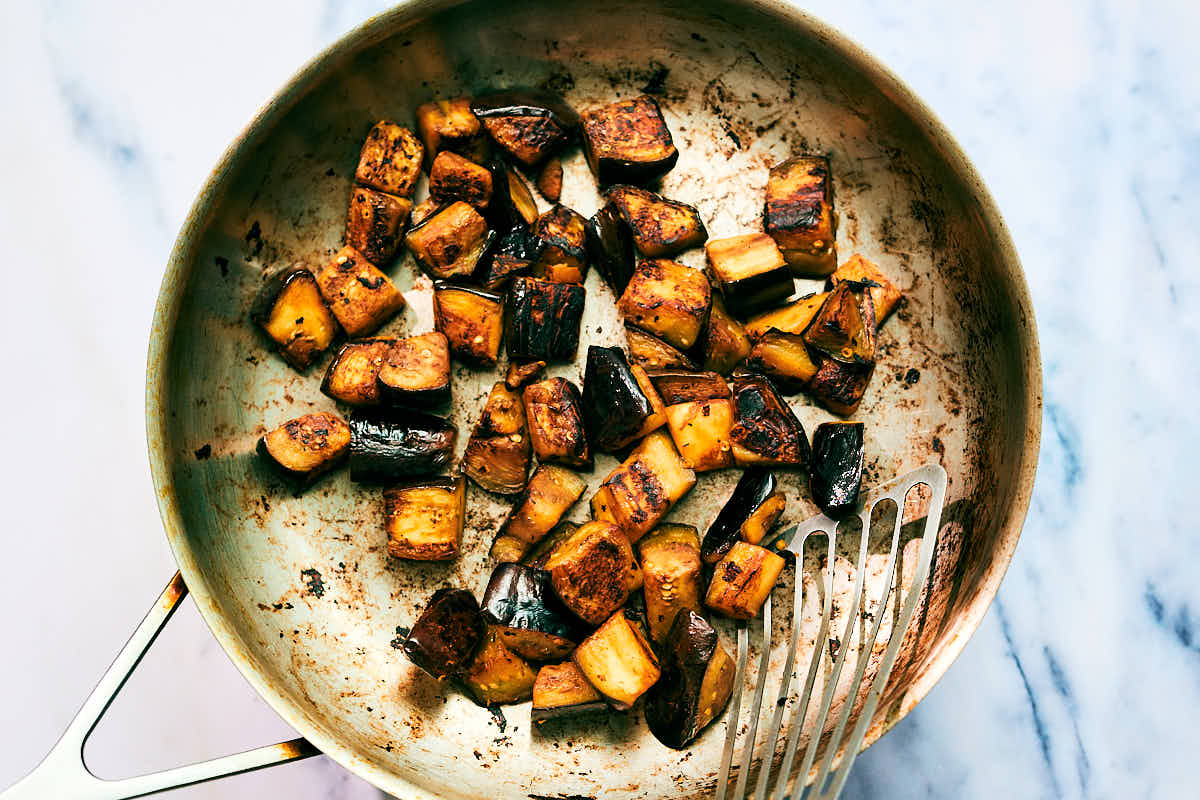
- Make sure your skillet is hot enough for eggplant: A properly heated pan is key for ensuring your eggplant doesn't stick. To check the temperature, flick a few drops of water onto the pan—if they dance and skid around, it's hot enough. If the water droplets steam, let the pan heat up more.
- Forgot to save pasta water? While pasta water helps sauces cling because of its starch, you can salvage it by adding a splash of hot tap water. Make sure to toss the noodles really well so the sauce can coat evenly.
- If scaling up the recipe: This recipe was designed for 2 large servings, which gives ample space in the pan for tossing. If you want to make a double batch (4 servings), make sure you're using a very large skillet (at least 12-inches). I don't recommend scaling up the recipe even more, because you'll overcrowd the pan.


Love this recipe? Please leave a 5-star 🌟🌟🌟🌟🌟 review below!
📖 Recipe
Gochujang Pasta with Eggplant
Ingredients
Eggplant
- 1 lb eggplant (see note 1)
- 1¼ teaspoon fine sea salt (divided use)
- 1 tablespoon grapeseed oil (or other neutral oil)
- 1 tablespoon tamari (or soy sauce)
- 1 teaspoon toasted sesame oil
Pasta
- 3 scallions (green onions)
- 6 oz dried linguine (or spaghetti)
- 3 tablespoons butter (see note 2, vegan if needed)
- 2 cloves minced garlic
- 4 teaspoons gochujang paste (not sauce, see note 3)
- ¼ cup finely grated Parmesan cheese (see note 4, vegan if needed)
- crispy onions and/or scallion curls (for garnish)
Instructions
- Prep Scallions: Thinly slice 3 scallions. Roughly separate the white and light green parts (for cooking); and dark green part (for finishing).
- Prep Eggplant: Chop 1 lb eggplant into large bite-sized pieces (1-inch/2.5 cm). Add 3 cups cold water and 1 teaspoon of fine sea salt to a medium bowl, stir to mix. Add chopped eggplant to the bowl, then nestle a smaller bowl directly on top to ensure the eggplant is submerged in the salt water. Let sit for 10 minutes. Drain and pat eggplant dry.
- Cook Eggplant: Heat a large stainless steel skillet (see note 5) over medium-high heat. (It's hot enough when you flick water on the pan and large droplets bounce and skid around). Swirl 1 tablespoon grapeseed oil in skillet, then add eggplant in a single layer. Sprinkle with remaining ¼ teaspoon salt. Cook, stirring occasionally, until all sides are golden brown, 8 to 10 minutes. (Reduce heat if needed; add more oil if your eggplant starts to stick). Transfer to a bowl, gently toss with 1 tablespoon tamari and 1 teaspoon toasted sesame oil. Set aside.
- Cook Pasta: Meanwhile bring a large pot of salted water to a boil. Add 6 oz dried linguine and cook until al dente according to package directions. Scoop out 1 cup of the pasta water and set aside, then drain noodles.
- Build sauce: Use the same skillet from the eggplant, but let it cool down slightly (so the butter doesn't burn). Return to low heat. Melt 3 tablespoons butter, then add 2 cloves minced garlic, and the white/light green parts of the scallion. Stir to mix and cook until the garlic is pale golden, about 2 minutes. Add 4 teaspoons gochujang paste and ⅔ cup of the reserved pasta water to the skillet. (Save remaining pasta water for finishing step). Whisk until the gochujang is evenly mixed into a smooth sauce.
- Finish: Add cooked pasta to the skillet, toss until well coated. Scatter in ¼ cup finely grated Parmesan cheese and the minced dark green part of the scallions. Toss again, adding splashes of more pasta water as needed, until the noodles are coated in a silky sauce. Taste and adjust seasoning if needed. Garnish with crispy onions and/or scallion curls, if using.
Notes
- Eggplant: You can use Globe, Japanese, or Chinese eggplant for this. If using Globe eggplant, use small to medium-sized ones, for the best flavor and texture.
- Butter: Unsalted butter is recommended, but salted butter works too.
- Gochujang Paste: A thick, savory, and spicy fermented Korean chili paste. It's usually stocked next to other Asian condiments; often packaged in a red tub with a flip-top lid. Otherwise, find it online or at an Asian grocery store. This recipe uses Gochujang Paste—not Gochujang Sauce (which is thinner and includes added seasonings, sugar, vinegar, etc).
- Parmesan: ¼ cup of finely grated powdery Parmesan weighs 1 oz. To quickly grate Parmesan into a "powder", add chunks of cheese to a food processor or blender. If using a microplane, you'll need closer to ½ cup to get the same 1 oz weight because it yields lighter, fluffier shreds. If you need vegetarian-friendly Parmesan, look for one made with "microbial enzymes" rather than "rennet". Alternatively, Parmesan can be substituted for another Italian hard cheese, such as Asiago.
- Skillet: For best results, I recommend using a large (12-inch) stainless steel skillet or similar. I also tested this recipe in a cast iron skillet—it works, but you need to give the cast iron more time to cool down between sauteing the eggplant and starting the butter sauce. (Cast iron is better at retaining heat, so it stays hotter for longer vs. stainless steel). If you don't give the cast iron skillet enough time to cool down, your butter and garlic can burn easily.
- Garnishes (optional): Storebought crispy onions or shallots add a nice savory crunch. To make scallion curls, slice the green parts of the scallion into 3-inch (8 cm) lengths, then slice razor-thin strips and submerge in ice water. The scallions will curl as they soak in the cold water.

LEAVE A COMMENT