

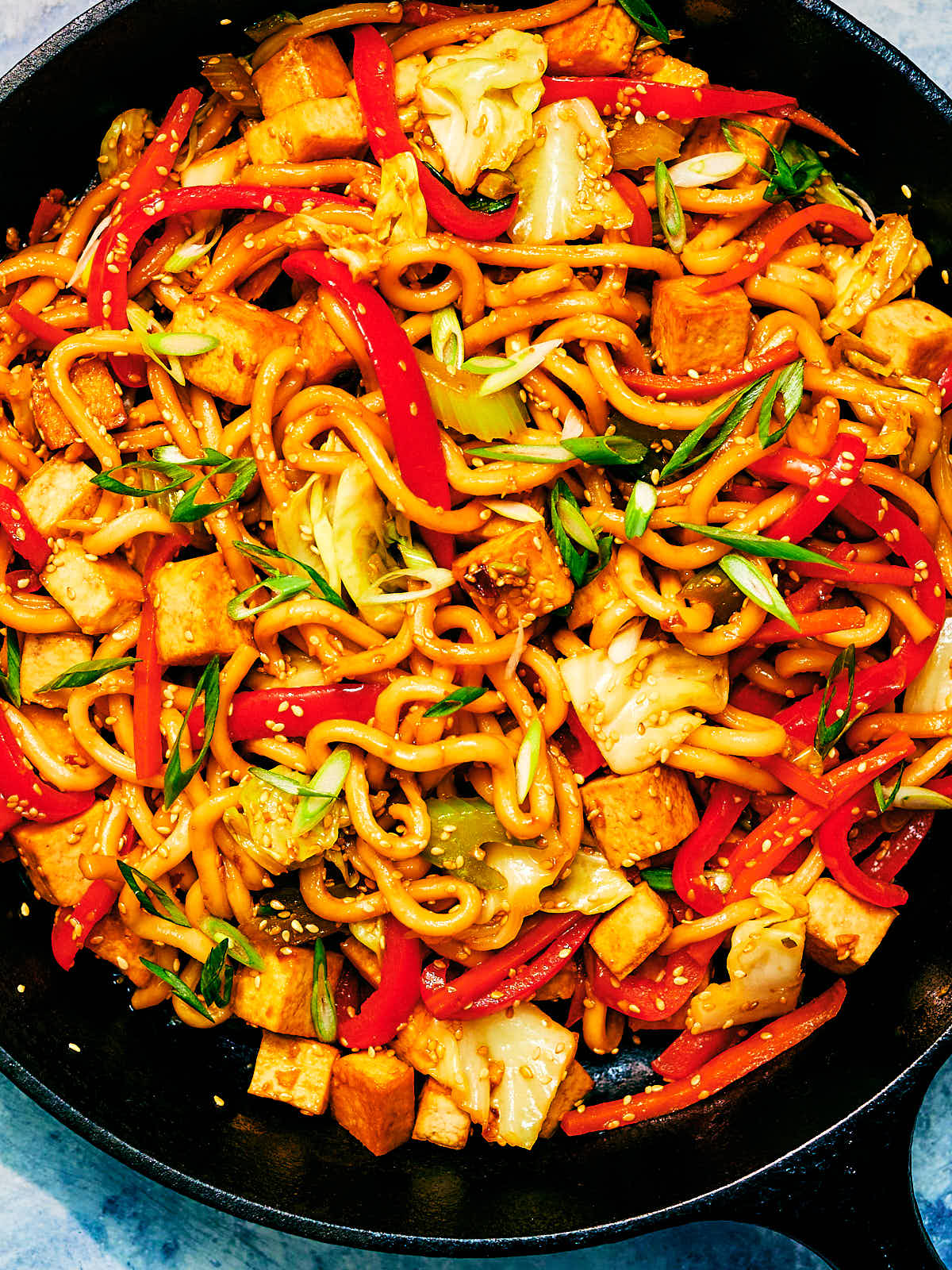
Want a dinner that’s faster and cheaper than delivery? Try this easy Vegan Yaki Udon! It’s saucy, savory, and made with pantry staples you probably already have. No mirin, no oyster sauce, and no wok required—just simple ingredients and big flavor in every bite.
Stir fries are one of the fastest weeknight dinners you could make. They're often ready in less than 30 minutes—like my Kung Pao Vegetables, Green Curry Fried Rice, or the Vegan Pad Thai from my cookbook. These are all great recipes to try next!
Jump to:
Why you'll love this recipe
- Quick: 20 minutes to make—perfect for weekdays! It's faster than ordering takeout.
- High protein vegan recipe: 21 to 32 grams of plant-based protein per serving.
- Budget-friendly: This Vegan Yaki Udon recipe turns inexpensive ingredients into a satisfying and craveable meal.
- Flavor-packed: Umami-rich ingredients—like tamari and sesame oil—add loads of flavor with minimal effort. Combined with udon noodles, tofu, and colorful veggies—it makes a delicious meal you'll want on repeat.
- One pot: Everything's cooked in one skillet—so you won't have a pile of dishes to clean!


Ingredients (and substitutes)
Yaki Udon turns budget-friendly ingredients into a flavor-packed meal. Although traditionally made with meat, this vegan version is still loaded with umami from simple pantry stables.
Here's what you'll need for this recipe (plus easy substitutes):

- Udon Noodles: Vacuum-sealed fresh udon noodles have a long shelf life, so they're great for the pantry! Find them in the refrigerated noodle section or with Asian ingredients. Frozen udon works too.
- Grapeseed Oil: My favorite neutral oil—but any high-heat, flavorless oil like canola or vegetable works.
- Cabbage: Green cabbage is typical for Yaki Udon. But you could swap in Napa cabbage, Savoy cabbage or baby bok choy.
- Tamari: The salty, umami-rich base of the sauce. You can substitute soy sauce. If you're very sensitive to salt, you can use a bit less. But don’t skimp too much—Yaki Udon’s salty kick is what makes it so irresistible!
- Brown Sugar: Yaki Udon has a hint of sweetness, to balance out the other flavors. Use dark or light brown sugar. Granulated sugar works in a pinch.
- Rice Vinegar: A splash of unseasoned rice vinegar makes the flavors pop. Apple cider vinegar works as a substitute.
- Sambal Oelek (optional): This Asian chili paste adds a touch of heat and balance. You can swap Sriracha or a similar substitute, minced fresh ginger, or just skip it altogether.
Find the recipe card below for the complete recipe, including all ingredients and instructions.
How to make Vegan Yaki Udon
It takes only 20 minutes to make this crave-worthy Vegan Yaki Udon. Here's how:

1. Soak packaged udon in hot water, then gently separate with chopsticks or tongs.

2. Drain udon noodles then toss with a bit of oil, to prevent them from sticking.

3. Mix together the sauce in a small bowl or jar. Set aside.

4. Pan-fry tofu until golden brown. Transfer to a bowl and toss with a bit of the sauce.

5. Stir fry the vegetables, then add udon noodles, sauce, and sesame seeds.

6. Add the tofu and cook for a couple minutes until everything's hot and saucy.
Find the recipe card below for the complete recipe, including all ingredients and instructions.
Best way to separate udon noodles
I grew up eating udon noodles. But if you're new to them, here's a tip: fresh udon noodles can break easily if not handled right!
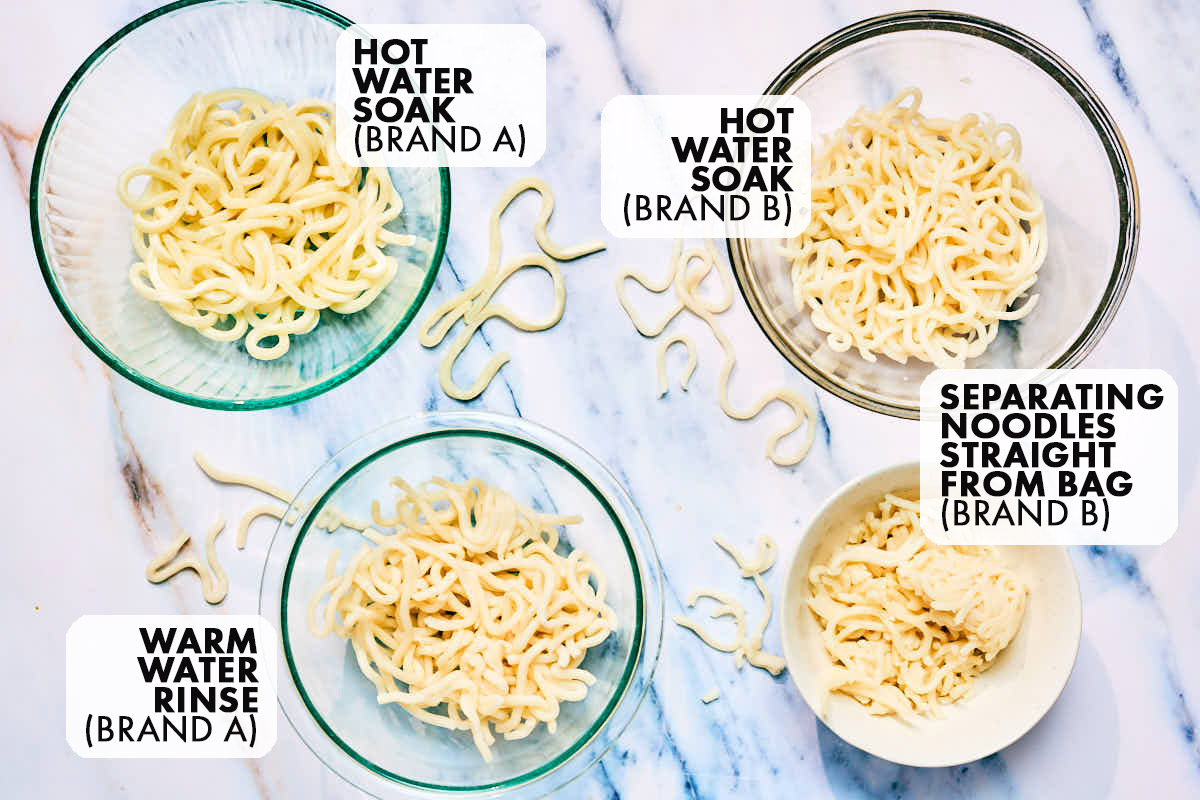
How you prepare packaged udon makes all the difference. As the photo below shows—you can either end up with long, bouncy strands or a crumbly mess of broken noodles.
How different methods rank and why
- Hot water soak (my favorite): Pour boiling water over the noodles (I use a kettle because it's quick). Soak for 90 seconds, then gently separate with chopsticks or tongs. Slightly warming them prevents breakage, giving you long strands without overcooking.
- Warm water rinse: Some people recommend rinsing udon under warm running water. I find that many noodles still break with this method, because it's hard to warm the noodles quickly and evenly. But, it's a step-up from not doing anything.
- Straight from the bag: Many online recipes tell you to add the udon straight from the package and into the pan. I don't recommend this! You'll get many broken noodles—see the bottom right bowl in the photo above.
Save this recipe!
Tips
- You can swap frozen udon: If you can't find the packaged fresh udon, feel free to use frozen instead. You'll need to boil frozen udon—and take care not to overcook it! Follow package instructions for "stir fry" or cook 1 minutes less than the timing for "soup". Drain, then toss with oil as the recipe says.
- Cut veggies while tofu cooks: If you work quickly, you can chop all the veggies while the tofu is pan-frying—to save time!
- Use a big skillet: One batch of this recipe just fits into a 10-inch (25 cm) skillet—so don't go smaller! A 12-inch (30 cm) or larger skillet gives you more space for tossing.
- You can use cast iron instead of nonstick: I slightly preferred the tofu cooked on a nonstick skillet—compared to a seasoned cast iron skillet. But both will work for this!
- If doubling the recipe: Similar to my Vegan Kung Pao, cook in batches if you're planning to make more.
- Feel free to swap the veggies: This recipe is fairly flexible—you can mix up the veggies based on what you have on hand. Just make sure they're cut so that they cook in the same amount of time.
Recipe FAQ's
Yes, plain udon noodles are usually vegan. But check the package to confirm.
Yes, you can use frozen udon instead of fresh. Just boil it for 1 minute less than the package says, because it'll finish cooking in the skillet. Drain and toss with oil like the recipe instructs.
You can, but it won’t taste quite as good! If salt’s an issue, swap 1 tablespoon of tamari with 1 tablespoon of water. Taste after cooking and add more tamari if needed.
You can make the sauce and cut the veggies in advance. For best results, stir fry the noodles and vegetables just before serving. But leftovers do keep for up to 3 days in the fridge.

More Asian noodle recipes:



Love this recipe? Please leave a 5-star 🌟🌟🌟🌟🌟 review below!
📖 Recipe
Vegan Yaki Udon (Stir Fried Udon Noodles)

Ingredients
Udon Noodles
- 14 oz cooked udon noodles (from package, see note 1)
- 2 teaspoons grapeseed oil (or other neutral oil)
Tofu
- 1 tablespoon grapeseed oil (or other neutral oil)
- 12 oz cubed extra firm tofu (½-inch/1.3 cm cubes)
Stir Fry Vegetables
- 1 tablespoon grapeseed oil (or other neutral oil)
- 1 sliced red bell pepper (or orange or yellow bell pepper)
- 1 large sliced carrot (2-inch/5cm long matchsticks)
- 1 stalk sliced celery (¼-inch/0.6 cm half-moons)
- 1 cup chopped green cabbage (see note 2)
- 2 thinly sliced scallions/green onions (more for garnish, optional)
- 2 tablespoons toasted sesame seeds
Sauce
- ¼ cup tamari
- 2 cloves minced garlic
- 1 tablespoon brown sugar
- 2 teaspoons toasted sesame oil
- 1½ teaspoons rice vinegar
- 1 teaspoon sambal oelek or sriracha (see note 3)
Instructions
- Sauce: In a small bowl (or jar), add ¼ cup tamari, 2 cloves minced garlic, 1 tablespoon brown sugar, 2 teaspoons toasted sesame oil, 1 teaspoon sambal oelek or sriracha, 1½ teaspoons rice vinegar. Stir (or shake) to mix.
- Udon Noodles: Take 14 oz cooked udon noodles out of the package(s) and place in a medium heatproof bowl. Pour boiling water over the noodles until completely covered. Let sit for 90 seconds, then gently ease the noodles apart using tongs or chopsticks. Use a strainer to drain noodles. With noodles still in the strainer, drizzle 2 teaspoons grapeseed oil and gently toss with your fingers to coat. Set noodles aside in strainer.
- Tofu: Warm 1 tablespoon grapeseed oil in a large nonstick skillet over medium heat (see note 4). Spread out 12 oz cubed extra firm tofu and cook until golden brown on most sides, 6 to 8 minutes. Transfer tofu to a shallow bowl, drizzle with 1 tablespoon of the Sauce. Toss to coat, then set aside.
- Stir Fry: Return skillet to medium heat (no need to clean). Add 1 tablespoon grapeseed oil, then cook 1 sliced red bell pepper, 1 large sliced carrot, 1 stalk sliced celery, and 1 cup chopped green cabbage until tender-firm (not fully cooked), 2 to 3 minutes. Add udon, all the remaining Sauce, 2 thinly sliced scallions/green onions, and 2 tablespoons toasted sesame seeds. Toss until noodles are well coated. Scatter in tofu. Cook for 2 minutes to let the flavors meld—taking care not to overcook noodles. Taste and adjust seasonings if needed. Divide into bowls. Garnish with more scallions if desired.
Notes
- Udon Noodles: Find fresh cooked udon in vacuum-sealed bags with refrigerated noodles or on the shelf with Japanese ingredients. For frozen udon, boil until tender (1 minute less than package directions), drain well and toss with the oil to prevent sticking.
- Green Cabbage: You can substitute Napa cabbage, Savoy cabbage, or baby bok choy.
- Sambal Oelek: This versatile Indonesian chile paste (hot sauce) adds a bit of heat and brightness. You can substitute Sriracha or ½ teaspoon minced ginger—or if you don't want any heat, just leave it out.
- Skillet: I recommend a non-stick skillet no smaller than 10-inches (25 cm) for one batch. A 12-inch (30 cm) is more ideal, as it gives you more space for cooking. I slightly prefer the tofu cooked in a non-stick skillet, because the exterior gets more evenly golden and crisp. But a well-seasoned cast-iron skillet works too.
- Storage Tips: Keep leftovers in the fridge and enjoy within 3 days. To reheat, ise a lightly oiled non-stick or cast-iron skillet or a microwave.
- Serving Size: Serves 2 to 3, depending on how hungry you are!



LEAVE A COMMENT